
The Overlooked Athlete Who Took Out a Future President with One Move
The Forgotten Showdown Between Jim Thorpe and Dwight Eisenhower

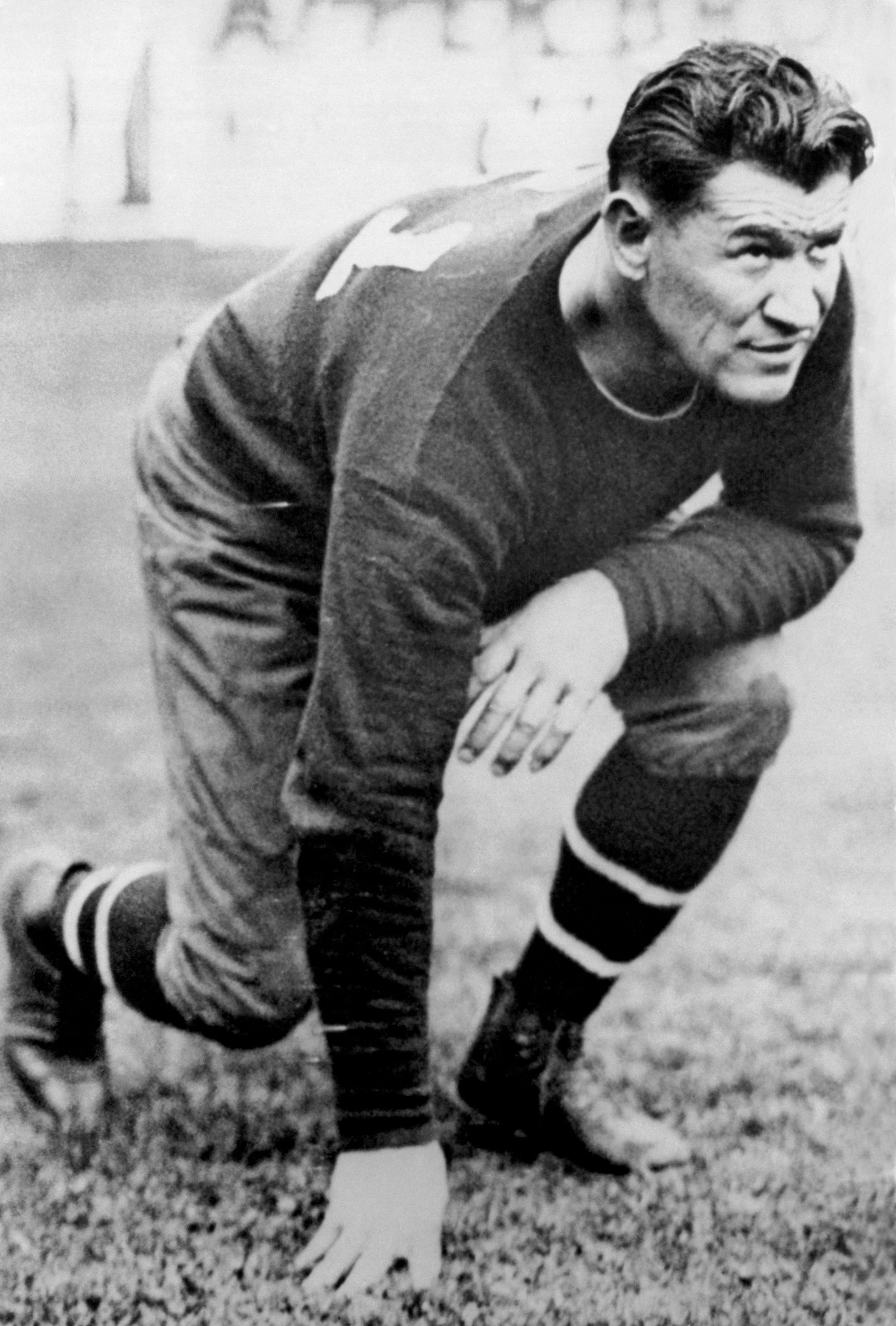
By the second half of the 1912 football game between Army and the Carlisle Indian School, Dwight D. Eisenhower was growing frustrated.
Eisenhower had a reputation on the Army team as a hard-hitting tackler. All season, he had read newspaper accounts describing Carlisle’s star player, Jim Thorpe, as nearly impossible to bring down. Ike desperately wanted to become the Army defender who finally stopped him.
Thorpe entered the game as one of the most famous athletes in the world. Just four months earlier, he had won both the pentathlon and decathlon at the 1912 Stockholm Olympics. At the medal ceremony, Sweden’s King Gustaf V reportedly told him, “You, sir, are the greatest athlete in the world.”
Eisenhower’s first attempts to bring Thorpe down did not go as planned. According to Lars Anderson’s book Carlisle vs. Army, Eisenhower’s first two tackles barely slowed the Native American star.
Desperate to stop Thorpe, Eisenhower enlisted the help of his Army teammate Leland Hobbs, who would also become a general during World War II. Eisenhower proposed that they give Thorpe the “one-two” early in the second half: one player would hit him high while the other tackled him low. They hoped the combined force of the blow would send Thorpe to the sideline.
During one of Carlisle’s offensive drives, they finally got their chance.
Thorpe sprinted up the field with the ball. Eisenhower and Hobbs charged at him from opposite sides, then lunged toward him at nearly the same moment.
But just before they reached him, Thorpe abruptly stopped. It was the kind of stop-and-start move he had used to evade defenders throughout his career. Eisenhower and Hobbs missed Thorpe and crashed into each other instead.
Both Army players were left dazed on the ground. They eventually recovered enough to leave the field, and neither returned to the game.
Carlisle won, 27–6.
Eisenhower went on to become the Supreme Allied Commander in Europe during World War II and later served two terms as president of the United States.
Thorpe’s life followed a different path. After leaving Carlisle, he played professional baseball and became one of the early stars of professional football. But athletes of his era earned nothing close to modern salaries, and Thorpe never became wealthy.
In January 1913, newspapers revealed that Thorpe had been paid a small amount to play minor-league baseball during the summers of 1909 and 1910. That violated the strict amateurism rules governing Olympic competition.
Thorpe was not the only college athlete who played summer baseball for money. Others protected their amateur status by competing under assumed names. Thorpe, however, had played under his own name.
The Amateur Athletic Union revoked his amateur status, and the International Olympic Committee stripped him of his medals and records. The decision has long been criticized as unfair, particularly because the challenge to Thorpe’s eligibility came well after the deadline established by the rules of the 1912 Games. His treatment has also been examined in the broader context of the discrimination Native American athletes faced at the time.
After Thorpe’s athletic career declined, he struggled to support himself. He worked a series of poorly paid jobs, including construction and ditch digging, and appeared in small Hollywood roles that often reduced Native Americans to stereotypes.
Despite the different paths their lives took, Eisenhower never forgot his encounter with Thorpe.
In a 1961 speech, he recalled, “Here and there, there are some people who are supremely endowed. My memory goes back to Jim Thorpe.”
He added that Thorpe “could do anything better than any other football player I ever saw.”
When Thorpe died in 1953, President Eisenhower sent a telegram of condolence to his family. Thorpe’s daughter Grace later told The Washington Post that receiving it changed the way she understood her father’s place in American life: “Dad’s enormous popularity and fame must have hit me for the first time.”
That realization strengthened her determination to restore his reputation: “I’m determined to fight for Dad’s reputation until his records are restored.”
Grace Thorpe’s efforts, along with those of many other advocates, helped build the campaign to reverse the Olympic decision. In 1982, the IOC reinstated Thorpe as a co-champion in the pentathlon and decathlon, and replacement medals were presented to his family the following year.
In 2022, the IOC went further, recognizing Jim Thorpe as the sole winner of both events—110 years after he became the first Native American to win an Olympic gold medal.